I’ll be honest. I love coffee. I love everything from how it tastes, the warm comforting embrace I feel when I have my morning espresso, to the slight tingle of concentration it gives me while I’m scrolling through Twitter on a Sunday morning. And I’m not alone.
With over 400 million cups of coffee consumed a day in the United States alone the amount of coffee we drink as a species is insane.
To give you some context, Finland consumes 12kg of coffee per capita, or in other words, the weight of a woolly spider monkey.

Naturally, I found myself wondering. “How can I make a better-tasting coffee?”
I have no barista training, nor do I have any experience working in a coffee shop or similar establishment. I’m what Call of Duty players would call a ‘noob’.
Now, don’t get me wrong — I know my way around a kettle, and I have no problem with pouring a teaspoon or two of Nescafe’s finest into a mug and pairing it up with some boiling water. But I’m ready to take on a new challenge; I’m ready to have my spiritual awakening, in the realm of coffee at least.
So, I did what any person would do: consult google.
After about an hour of researching various bean types, coffee brewing apparatus and methods, I decided to go roll up my sleeves, put my money where my mouth was, and buy a homebrew coffee kit. And the results, well, they were okay at best.
The truth be told, I didn’t get the quality that I wanted. I was nowhere near the level of a tattooed and bearded barista with thick-framed glasses, so I dug deeper into what could have caused my not great creations and found a list of common mistakes:
Coffee Mistakes
1. Using water that’s not cold enough
2. Mismeasuring grounds
3. Using the wrong size grind
4. Using pre-ground beans
5. Getting the water to coffee mix wrong
Like a tonne of bricks, it hit me. The truth of the matter is, I just want to drink coffee. The end goal for me is to have an espresso that I can enjoy. I simply don’t want to spend hours learning how to measure the correct size ground, optimum water temperature or weighing my coffee beans before I grind them (I hate grinding beans).
What I did know though, is that my days of having instant coffee were over. After all of this, I won’t allow myself to revert to the ways of the past — what I need, is something that fits my needs. My lifestyle. Like Liam Neeson, my very particular set of skills.
Naturally, I did what everyone ends up doing — I bought an espresso machine. All I need to do now, is slide a shiny pod into the slot, make sure there’s water in the tank and press a button to get velvety smooth, rich, and delicious coffee.
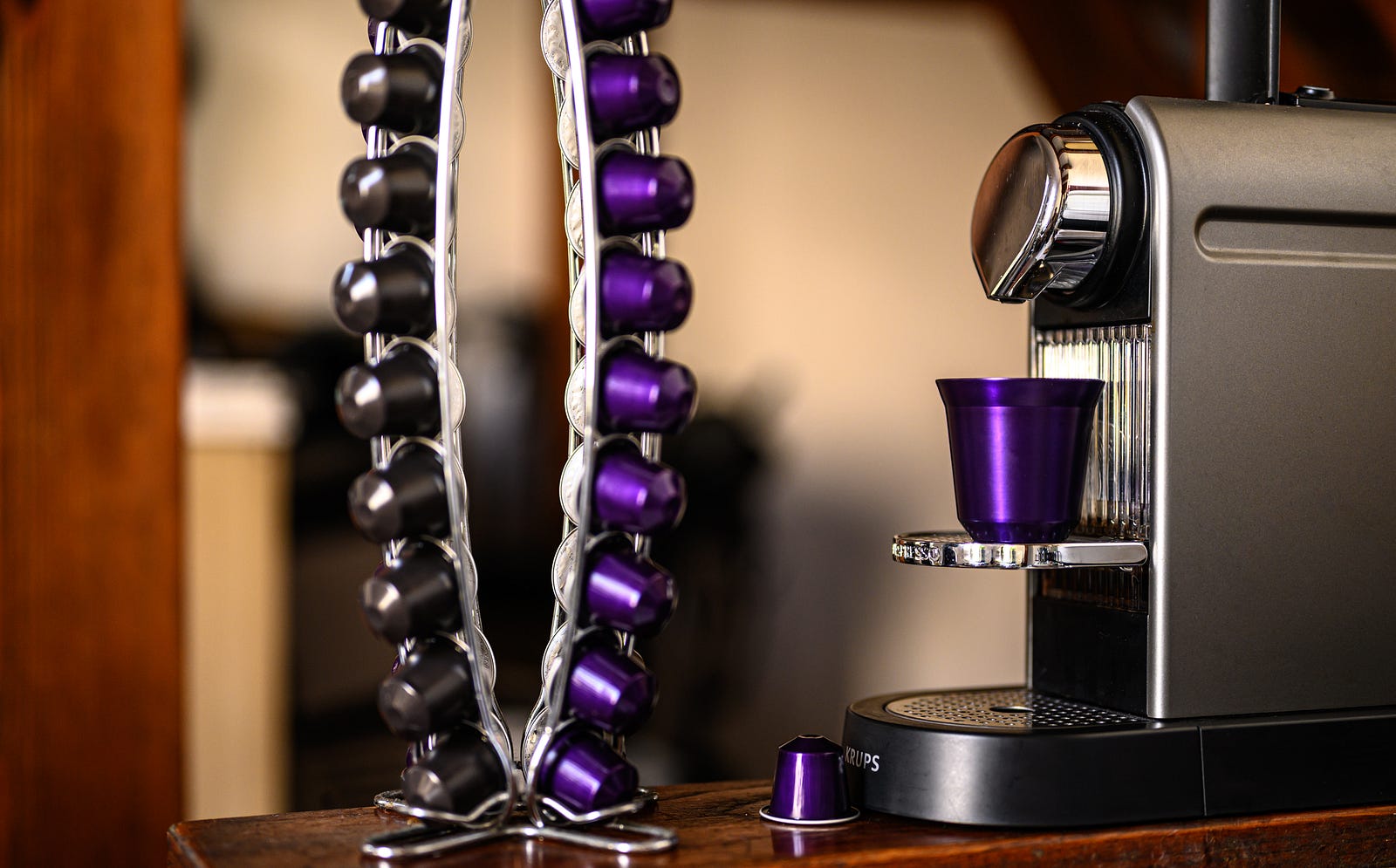
I bet you’re wondering: what about this epic tale of deep despair and glorious triumph teach us, about the world of low code / no-code platforms?
Well, it’s all about what you’re trying to achieve, and how much time, money, and effort you’re willing to spend to get there.
For most of us, like in the case of the espresso, our needs are simple.
We typically have some data that needs cleaning, joining with other data that sits somewhere else (perhaps on a cloud), and we want to train models to help us make better decisions with it.
Today’s technology has matured enough to let us be guided through model building. It will pick out the things that help make the best predictions and explain what it’s doing so you’re in control.
We can even get interactive charts, and sliders and play around with ‘what if’ analysis, to see what could happen.
The result of this is that for the majority, you can start to dive into the wonderful world of advanced analytics using things like machine learning models while being in control of what’s happening. You can use your skills, domain expertise and knowledge to help guide the model build, keeping the human at the centre and in control.
Don’t get me wrong — there is absolutely a need and a place for the coders, in the same way, there is a need for the trained barista. We simply wouldn’t be able to enjoy any of these benefits and conveniences without them, but the harsh reality is that there are far too few of them.
A lot of the time, it makes sense to give someone who wants a coffee and espresso machine, rather than a fully-fledged barista powerhouse with all the levers, bells, and whistles.
It makes sense then, for most people who use data to use low code / no-code platforms, rather than open a Juypter notebook.
You can indeed have your coffee and drink it too — never has it been easier to give the power of analytics to everyone, while not diluting true data science or underestimating the value it brings.
For most of us, we just want to solve our data problems, with the least amount of resistance. Something that’s built for people like us, something that gives us the flexibility to get as complex or as simple as our use-case needs to be.
Perhaps something as simple as pressing ‘run’.
 Vishal Soni